
How far would you go to save your immortal soul?’
This is the question that plagued Tudor High Chancellor, Sir Thomas More. Lawyer, philosophiser, and advisor to Henry VIII, when the court turned on its head at the arrival of Anne Boleyn. Hounded by prolific characters like Thomas Cromwell, his fellow court members, and the King, he was left with a choice to either protect his life by betraying his beliefs or face the executioner.
In the end, he decided to die for his principles.
It is no wonder that his story, of a man standing alone against the rapidly changing times, would be depicted again and again in TV shows and movies. Depicted as a historical example of a Tudor courtroom drama, in Robert Bolts ‘A Man for All Seasons’; Michael Hirst’s ‘The Tudors’; and Hilary Mantel’s ‘Wolf Hall’. His resilience has been reimagined contradictory depending on the medium. More as witty but crass, violent but kind. A hero, or villain.
Prosiding as the jury, Suzannah Lipscomb is joined by cultural historian and literary scholar, Prof. Sarah Churchwell; Jessie Childs author of "God’s Traitors - Terror and Faith in Elizabethan England"; historian and screenwriter Alex von Tunzelmann and Dr Joanne Paul, who is currently writing a biography of Thomas More’s life.
Together on this episode of 'Not Just the Tudors…Lates', our historians will bring forth their case on whether Thomas More was a true saint, or just a zealot opponent to change.
Up Next in Tudors
-
Why the English Revolution Failed - N...
January 1649, Whitehall. A king steps onto the scaffold. Moments later, Charles I is dead... tried and executed by his own subjects. For the first time in its history, England is without a monarch.
What follows is one of the most radical experiments in British history. The House of Lords is abol...
-
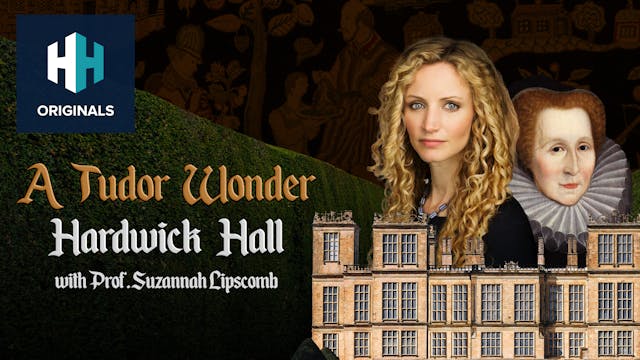
A Tudor Wonder - Hardwick Hall - with...
A History Hit treat for the holidays, this special new film reveals an extraordinary Tudor life-story and an amazing creation. We meet the extraordinary Bess of Hardwick and go inside the incredible home she built, a spectacular construction in glass and stone that defined the elegance and grande...
-
The Face of Anne Boleyn: Capturing a ...
What did Anne Boleyn look like? We know the famous portraits, but do they capture the real woman?
Prof. Suzannah Lipscomb joins the curators of Hever Castle, Anne’s childhood home, where they have gathered together more paintings of Anne than ever before for a special exhibition. At its heart i...


29 Comments