
He dominated the 20th century like no other, his shadow still hanging over the continent 70 years after his death.
But how did a choir boy from provincial Georgia rise to become the most powerful man in Russia? And what was his role in shaping the revolution that swept aside the Romanov's and brought the Bolsheviks to power?
Join our team of experts: Helen Rappaport, Victor Sebestyen, Dr Pablo De Orellana, Josh Levine, Iain MacGregor & Daniel Beer in part three of this four part series as we explore the personalities and key moments that lead to the downfall of the Romanovs and rise of the communists.
Full list of episodes below:
Part 1: Road to Revolution
Part 2: The Rise of Rasputin
Part 3: The Rise of Stalin
Part 4: The Last Days of The Romanovs
Up Next in People Who Made History
-
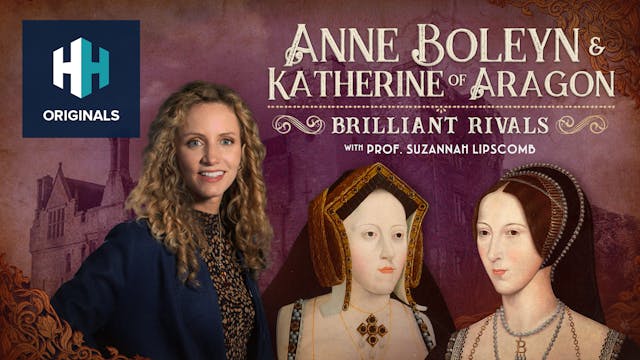
Anne Boleyn and Katherine of Aragon -...
Katherine of Aragon and Anne Boleyn - the first two wives of Henry VIII - are so often portrayed as opposites. Katherine as the loyal, scorned wife - Anne as the bright, bewitching upstart.
But now Prof. Suzannah Lipscomb returns to Hever Castle to explore what Anne and Katherine were really l...
-
Who Killed the Princes in the Tower?
In 1483, the twelve-year-old King Edward V and his younger brother were put in the Tower of London by their uncle, Richard, the Duke of Gloucester. Weeks later, Richard pronounced himself King. The boys were never seen again.
For more than 500 years it has been assumed that Richard III killed hi...
-
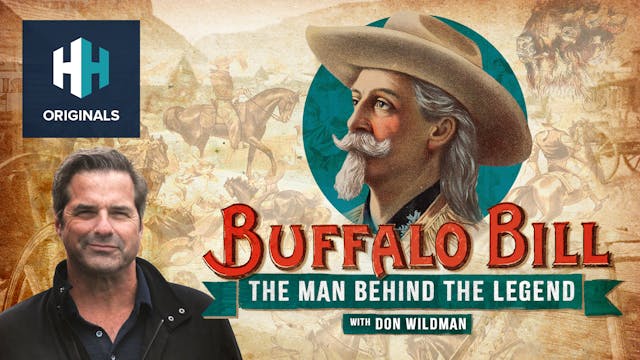
Buffalo Bill: The Man Behind the Legend
Buffalo Bill was America’s first celebrity… and the most famous man in the world at the turn of the 20th century.
He was a former scout, soldier, Buffalo hunter…but what he’s most known for of course, is his showmanship. He vied with PT Barnum for the title of greatest showman on earth.
At the ...

11 Comments