
History Hit’s ancient history expert, Tristan Hughes, digs deep into one of Ancient Egypt's greatest treasures, a site that ranks among the world’s most impressive religious sanctuaries in both its size, splendour and importance.
But there is another, fascinating side to exploring Karnak beyond the monumental structures - one that requires close analysis of its buildings and countless hieroglyphs. In the company of the director of Karnak, El Tayeb Gharieb Mahmoud, Tristan discovers that you can only really understand this enormous temple complex if you know how to decode the devotion to the local Theban god: Amun - a deity who was venerated here by pharaoh after pharaoh for well over a thousand years.
Tayeb helps translate the hieroglyphs that reveal this story, from Senusret I in the Middle Kingdom to Hatshepsut, Seti I and Ramesses II in the New Kingdom. We discover a shape-shifting god who represented everything from fertility to the cosmos.
We also find out how Karnak was a vast pharaonic notice board - revealing stories of war with its huge reliefs of military triumphs; and peace, with the first peace treaty in the world, agreed between Egypt and the Hittites after the Battle of Kadesh. Tayeb translates this massive treaty written in stone, possibly Ancient Egypt’s most important contribution to the modern world.
Up Next in Historical Tours
-
Rare Planes that Changed Aviation For...
Ever wondered how we went from flying small wooden machines, to supersonic jets taking off vertically in the space of less than 70 years?
Luke Tomes travels to Brooklands Museum in Surrey, one of Britain’s first operating aerodromes and home to one of the oldest and largest aircraft factories, t...
-
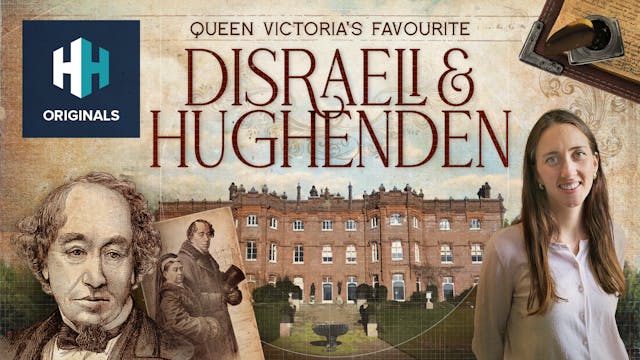
Queen Victoria's Favourite - Disraeli...
Hughenden - a beautiful house owned by the National Trust is set deep in the rolling greens of the Buckinghamshire countryside. This was the home of Queen Victoria’s favourite Prime Minister - Benjamin Disraeli. But Disraeli was so much more than a Queen's favourite. He was a writer, a performer,...
-
Kensington Palace: Untold Lives
Dan Snow explores behind the scenes at the majestic Kensington Palace, the glittering centre of the royal court in early Georgian England. It's a very special time to visit - the Historic Royal Palaces team has been delving deep into the archives to lift the veil of the public facing court and e...


32 Comments