World War Two
Selection of documentaries, interviews and podcasts about World War Two. From the Rise of the Hitler to the Liberation of Europe and the Atom Bomb.
-
The Death of Hitler
Did Hitler shoot himself in the Führerbunker, or did he slip past the Soviets and escape to South America? There have been innumerable documentaries, newspaper articles and twitter threads written by conspiracy theorists to back up the case for escape. Luke Daly Groves has made it his mission to ...
-
The Polish Pilots Who Fought for Britain
In the summer of 1940 Britain fought a battle for survival against the might of Hitler’s Luftwaffe. This Battle of Britain would see German air attacks on British airfields, cities, factories and docks. Brave RAF pilots intercepted these raids, but Britain was not alone. Among the RAF and Allied ...
-
Jan Stangreciuk: Veteran. Hero. Guinea Pig
Of all the clubs in the world, perhaps the most extraordinary is the Guinea Pig Club, a group of Second World War veterans that suffered terrible injuries and were then treated by pioneering surgeon Archibald McIndoe. Today there are only a handful left. Dan visits Jan Stangreciuk, one of the few...
-
Liberation 75: The Channel Islands
German forces seized control of the Channel Islands on 30 June 1940. By-passed by the Allies as they pushed east they remained under Nazi rule for almost 5 years, until the end of World War Two. This is the story of the British men and women who lived under the German occupation.
-
Mary Ellis: Touching the Sky
During the years of World War Two, a short lived, but remarkable, organisation existed. The Air Transport Auxiliary (ATA) was a civilian service that was tasked with the delivery of aircraft from factories to the squadrons of the RAF and Royal Navy, and the delivery of supplies. Featuring pilots ...
-
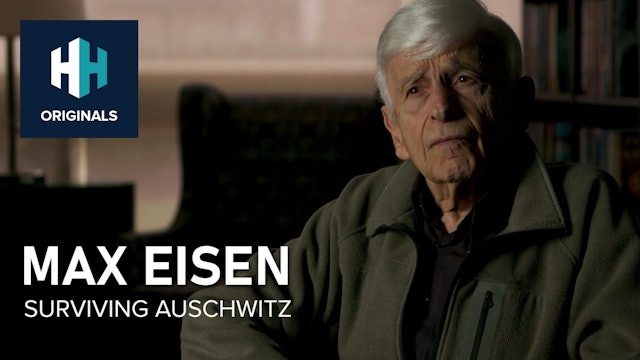
Max Eisen: Surviving Auschwitz
Max Eisen was only 15 when he and his family were taken from their Hungarian home to the infamous Auschwitz Concentration Camp during the Second World War. All of his relatives were killed; only Max survived to see VE Day and eventual liberation. 74 years on from being liberated, he talks about t...
-
VE Day in America
On 8 May 1945 Karl Donitz authorised the formal, final surrender of Nazi Germany, marking the end of World War Two in Europe. This archive footage from 1945, retells the major events of the Second World War and how complete victory in Europe was finally achieved. A British Movietone film first re...
-
To the Shores of Iwo Jima
Impressive colour film from 1945 covering the American Iwo Jima campaign. Includes remarkably intimate footage of the landings. Look out for the impressive views of Mount Suribachi, the great hulking mountain that dominates the island, and concealed the intricate Japanese defensive system. The fi...
-
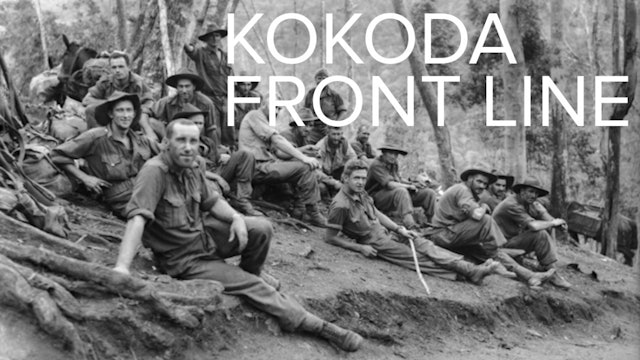
Kokoda Front Line!
In July 1942, Japanese forces made landings at Gona on the north coast of modern Papua New Guinea, as part of a wider plan to defend the naval base of Rabaul. Having been unable to land at Port Moresby in May - a move that resulted in the Battle of the Coral Sea - they now planned to reach the ca...
-
RAF 100: Inside Cranwell College
For over 100 years, the Royal Air Force has defended the skies of Britain and projected the country’s power and influence around the world. As the world’s oldest independent air force, it also has a rich and often astonishing history – one that is filled with the stories of extraordinary men and ...
-
Uncovering the Enigma: Bletchley Park
Bletchley Park is now internationally famous as the home of the code-breakers during World War Two. But the endeavours of Alan Turing, Dilly Knox and their colleagues were so top secret that we are only now beginning to learn how they really lived day-to-day in this magnificent house, where – beh...
-
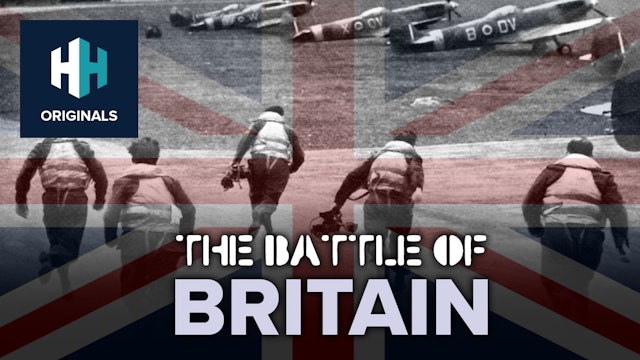
The Battle of Britain
In June 1940 Nazi Germany overran France and forced the British army to evacuate at Dunkirk. Severely lacking in military equipment, Britain and her empire now stood alone against Adolf Hitler's forces. Nevertheless Winston Churchill, Britain's new prime minister, refused to come to peace terms, ...
-
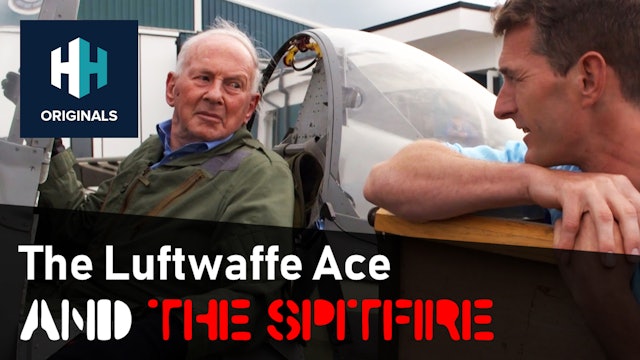
The Luftwaffe Ace and the Spitfire
He is a German Luftwaffe ace with 81 confirmed victories on the Eastern front. Now a 95-year-old veteran, his talent and courage remain legendary throughout the world. It is the most iconic British fighter ever built. The hum of its Rolls-Royce Merlin engine, the wonderful elliptical wing, and th...
-
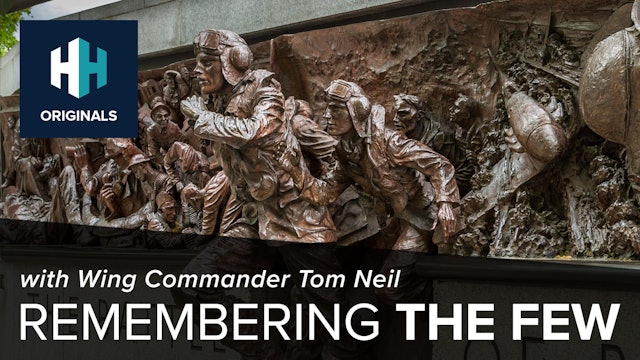
Remembering the Few with Wing Commander Tom Neil
Last summer, we were lucky enough to interview Wing Commander Tom Neil, one of the last of 'the Few' who fought in the Battle of Britain. During the Battle he shot down at least 13 enemy aircraft; he saw over half his squadron shot down within 5 minutes; he is also credited with the longest fligh...
-
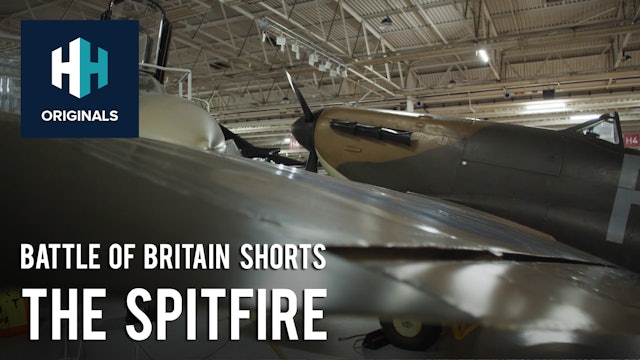
The Spitfire
The Spitfire remains one of the most iconic aircraft of the Second World War. Although their turnaround time was longer than the Hurricane (29 minutes), they were faster. This made them a good match for the Messerschmitt bf 109s. In an attack on a German formation, the Hurricanes would focus thei...
-
Snow in a Spitfire
The Spitfire is the most famous piston engine fighter plane. It played a vital part in the summer of 1940, keeping the Luftwaffe from gaining air superiority over Britain. Now Dan Snow, whose lifelong dream is has been to fly in this beautiful plane, gets the chance to go up in a two-seater versi...
-
The Battle of Okinawa
On 1 April 1945, as the Second World War in Europe was reaching its end, one of the bloodiest battles in the whole conflict commenced on a small island south of mainland Japan. It was the Battle of Okinawa. Saul David comes on the show to provide a fascinating rundown of this truly horrific battle.
-
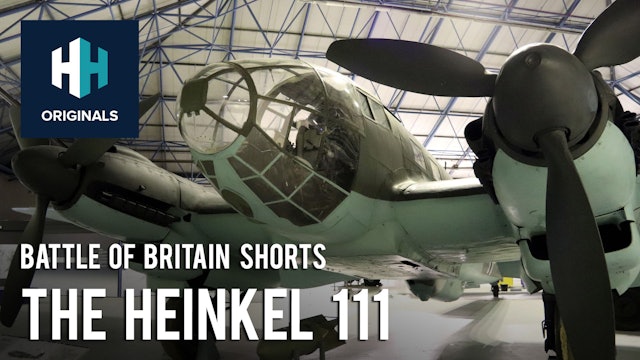
The Heinkel He 111
The Heinkel He 111 was the most numerous bomber which the Luftwaffe deployed during the Battle of Britain. It was capable of storing and delivering large bombs (250kg) and had state-of-the-art gyroscopic sights to improve its accuracy. The He 111 was protected armour plating and self-sealing fuel...
-
Okinawa Bulletin: Final Phases
The campaign for Okinawa, located just 350 miles south of Japan, was one of the bloodiest of the war. US land forces faced a Japanese defence occupying a system of tunnels, caves and fortifications exploiting the natural defensive advantages of the hilly southern region of the island. At sea, ves...
-
The Boy Who Followed His Father Into Auschwitz
This is the most remarkable father and son story I have ever come across. I am talking to historian Jeremy Dronfield about an astonishing true story of horror, love and impossible survival. In 1939, Gustav Kleinmann, a Jewish upholsterer in Vienna, was arrested by the Nazis. Along with his sixtee...
-
The Children of Calais: Clare Mulley on Refugees
A new statue has just been unveiled in Saffron Walden, an unassuming town in Essex, England. Five children are held, with limbs outstretched or shoulders hunched, in life-size bronze. One carries a tattered lifejacket, which hangs uselessly below him. The statue, titled Unaccompanied Children of ...
-
The German Invasion of Poland with Roger Moorhouse
The German invasion of Poland in September 1939 is often seen as a contest between the might of Hitler's war machine and an antiquated Polish military. But this perception of a modern, German force sweeping aside a fragile, backward enemy is far from the truth. Dan sat down with Roger Moorhouse t...
-
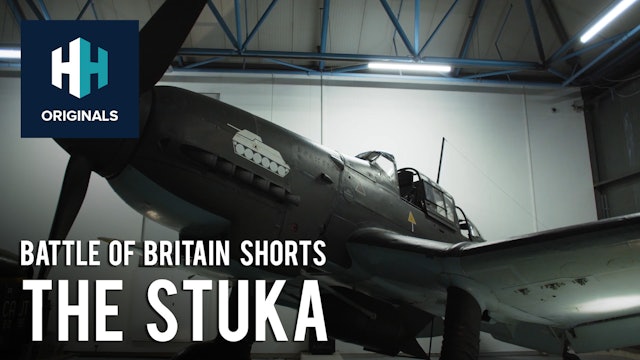
The Stuka
More famously known as the ‘Stuka’, the Ju 87 is perhaps the most recognisable dive bomber of the Second World War, made famous by its infamous Jericho trumpet. During the Battle of Britain, squadrons of Stukas gained some success destroying ground targets. On 13 August 1940 – Eagle Day – Stukas ...
-
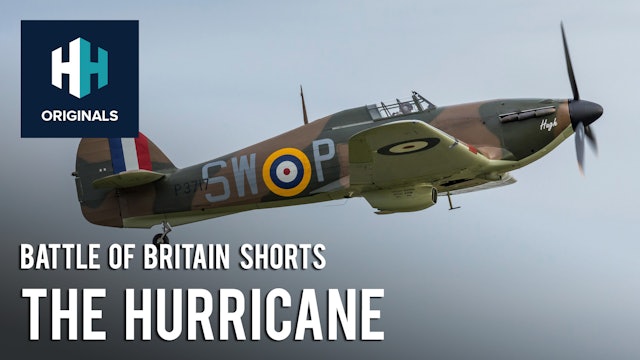
The Hurricane
Hawker Hurricanes accounted for 60% of German losses in the battle of Britain. They were the most numerous fighter aircraft which the RAF deployed, partly owing to their rapid turn-around time (it took them only 9 minutes to be refuelled and re-armed). Dan Snow provides an overview of the 'workho...