
In 1845, a British voyage of Arctic exploration led by Captain Sir John Franklin departed England aboard two ships, HMS Erebus and HMS Terror. The expedition was assigned to traverse the last unnavigated sections of the Northwest Passage in the Canadian Arctic and to record magnetic data to help determine whether a better understanding could aid navigation.
The expedition met with disaster after both ships and their crews, a total of 129 officers and men, became icebound in Victoria Strait near King William Island in what is today the Canadian territory of Nunavut. After being icebound for more than a year Erebus and Terror were abandoned in April 1848, by which point Franklin and nearly two dozen others had died. The survivors, now led by Franklin's second-in-command, Francis Crozier, and Erebus's captain, James Fitzjames, set out for the Canadian mainland and disappeared.
In his latest book, ‘Erebus: The Story of a Ship’, globetrotter, author and comedian Sir Michael Palin explores the journey of the ill-fated former Hecla-class bomb vessel,and sat down with Dan Snow to discuss it’s history in more depth.
Up Next in Odysseys
-
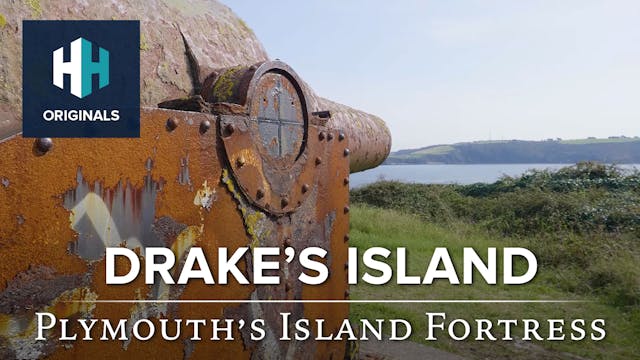
Drake's Island: Plymouth's Island For...
For generations, Drake's Island, situated just outside of Plymouth harbour, had been owned by the Ministry of Defence. Recently, however, this island bastion has gone into private ownership. In this documentary Bob King, the gatekeeper of Drake's Island, gives Dan an exclusive tour of this extrem...
-
Saving Timbuktu's Manuscripts
For centuries the city of Timbuktu was famed as a golden metropolis situated on the southern fringes of the Sahara; tales of its immense wealth and its reputation as a key centre of learning obsessed travellers and adventurers for many hundreds of years. Timbuktu certainly has one of the most ill...
-
Captain Cook's Endeavour
Captain James Cook is one of the greatest maritime navigators in history. Born in 1728 to a Scottish father and English mother, Cook grew up in Yorkshire and soon developed a great fascination with the sea and exploration. In 1746 Cook joined the merchant shipping industry when he moved to the ne...


13 Comments