

For medieval people, the apocalypse was not some distant prophecy—it was an imminent reality shaping their lives.
In Medieval Apocalypse, historian Dr. Eleanor Janega embarks on a journey through England and France to uncover how our ancestors understood the end of days. From the terrifying visions of the Book of Revelation to the vivid warnings carved into church walls, the apocalypse was woven into their art, literature, and daily existence.
Dr Eleanor Janega investigates the apocalyptic messages stamped into great cathedrals, beautifully illuminated in manuscripts and woven into great tapestries. Through these works, the medieval world wrestled with the ultimate questions: who would be saved, and who would be damned?
Dr. Janega explores a world where faith and fear collided, and where the apocalypse wasn’t just a story—it was a certainty.
If you enjoyed the Mystery Play, you can see one with your own eyes…On Saturday 26 April 2025, a cycle of medieval mystery plays will be performed by various troupes around St Edmund Hall’s grounds: https://www.seh.ox.ac.uk/mystery-cycle
For even more Apocalypse, on 8th April, Dr. Eleanor Janega and Prof. James Palmer uncover and celebrate every clawed and winged monster that foretold the end of the medieval world in History Hit's podcast Gone Medieval https://lnkfi.re/rzjPMB
Up Next in Stories from the Road
-
D-Day - 24 Hours in Normandy
At 07.37 on 6th June 1944, the ramps of the landing craft carrying the men of A and D companies 6th battalion Green Howards went down, and the men stormed up the beaches.
It was D-Day.
Now Dr James Rogers is going to put D-Day under the microscope, following in the footsteps of the men of the ...
-
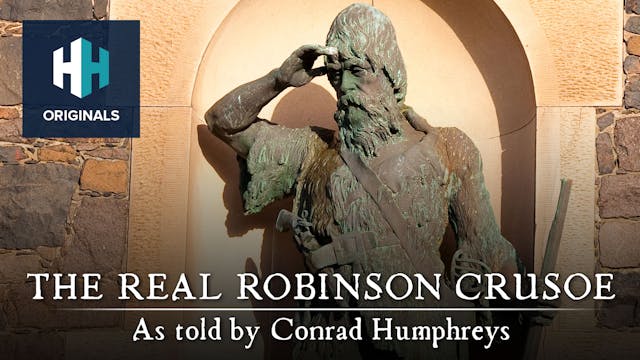
The Real Robinson Crusoe
Professional yachtsman Conrad Humphreys and Dan Snow tell the story of Alexander Selkirk, an 18th century sailor whose story, some argue, served as a historical basis for Daniel Defoe's famous novel Robinson Crusoe.
-
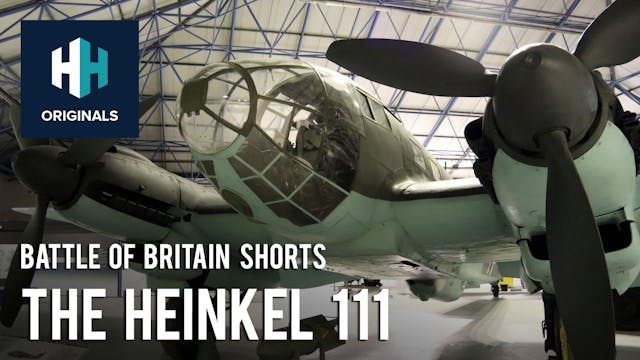
The Heinkel He 111
The Heinkel He 111 was the most numerous bomber which the Luftwaffe deployed during the Battle of Britain. It was capable of storing and delivering large bombs (250kg) and had state-of-the-art gyroscopic sights to improve its accuracy. The He 111 was protected armour plating and self-sealing fuel...

21 Comments