
How far would you go to save your immortal soul?’
This is the question that plagued Tudor High Chancellor, Sir Thomas More. Lawyer, philosophiser, and advisor to Henry VIII, when the court turned on its head at the arrival of Anne Boleyn. Hounded by prolific characters like Thomas Cromwell, his fellow court members, and the King, he was left with a choice to either protect his life by betraying his beliefs or face the executioner.
In the end, he decided to die for his principles.
It is no wonder that his story, of a man standing alone against the rapidly changing times, would be depicted again and again in TV shows and movies. Depicted as a historical example of a Tudor courtroom drama, in Robert Bolts ‘A Man for All Seasons’; Michael Hirst’s ‘The Tudors’; and Hilary Mantel’s ‘Wolf Hall’. His resilience has been reimagined contradictory depending on the medium. More as witty but crass, violent but kind. A hero, or villain.
Prosiding as the jury, Suzannah Lipscomb is joined by cultural historian and literary scholar, Prof. Sarah Churchwell; Jessie Childs author of "God’s Traitors - Terror and Faith in Elizabethan England"; historian and screenwriter Alex von Tunzelmann and Dr Joanne Paul, who is currently writing a biography of Thomas More’s life.
Together on this episode of 'Not Just the Tudors…Lates', our historians will bring forth their case on whether Thomas More was a true saint, or just a zealot opponent to change.
Up Next in More than Just the Tudors
-
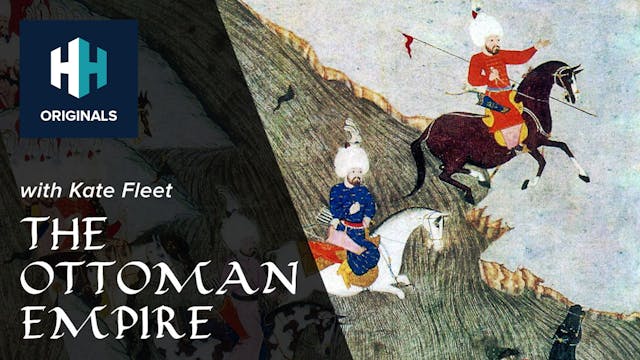
Ottoman Empire with Kate Fleet
The region stretching from eastern Europe and sweeping right across into Arabia and the north coast of Africa, was home to one of the most extraordinary empires in history: the Ottoman Empire. Along its routes flowed ideas, goods, disease and death. In existence for 600 years, it also saw the swe...
-
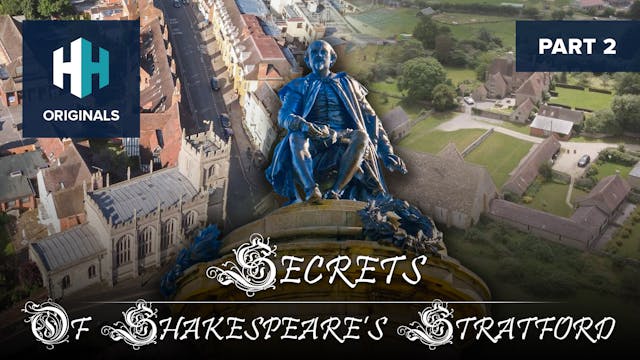
Secrets of Shakespeare's Stratford Ep...
In this episode, Alice and Dan discover how the Shakespeare family were rocked by religious turmoil of the 16th century. They visit one of the most notorious Catholic houses in the county, William Shakespeare's schoolroom and the ruins of Evesham Abbey.
-
Meet the Tudors - Holbein at Henry VI...
Imagine coming face to face with the extraordinary people who filled the court of King Henry VIII.
Well we can! Thanks to the extraordinary work of the artist hans Holbein the Younger.
Professor Suzannah Lipscomb goes to Buckingham Palace to enter the gallery of the Royal Collection where a bri...

27 Comments