Bring Out Your Dead: The Great Plague of 1666
More than Just the Tudors
•
23m
1665-1666 was not a good time for the people of London. Not only was most of the city engulfed by what soon became known as The Great Fire of London in September 1666, but months before the most infamous outbreak of disease in British history occurred: the Great Plague. Plague arrived in England at around about the 12th century, believed to have been brought to England by sailors. The contagion soon spread across the length and breadth of the British Isles with devastating impact – the so-called ‘Black Death.’ Since then, waves of plague outbreaks became a regular occurrence in England. Yet by 1665, these epidemics seemed to be finally abating - there had not been a major outbreak in plague in roughly thirty years. It proved the calm before the storm. 17th century London was a metropolis rife with squalor and disease – especially in the poorer areas. Overcrowding was common and there was no sanitation; open drains flowed through the centre of streets, the cobbles of which were covered in waste. The smell was so bad that many people covered their faces to diminish the odour. Conditions were prime for the outbreak of disease. The mainstream view of how the disease spread is by rats. Clearly the stinking city of London was the perfect place for rats to go and spread epidemics. The plague could affect anybody – so much so that one contemporary writer described it as “God’s terrible judgement on this city”. Yet it was the poor who suffered the worst due to their squalid living conditions and their inability to escape to the countryside. In this History Hit TV Original documentary medieval historian Helen Carr visits St Dunstan’s Church in Stepney, site of one of the biggest plague pits in London, to talk to 1666 expert Rebecca Rideal about the deadly, dehumanising disease which wiped out a quarter of the capital city. Rebecca Rideal is a factual television producer and writer, currently studying for a PhD on Restoration London during the Great Plague and the Great Fire at University College London.
Up Next in More than Just the Tudors
-
The English Parish Church: An Introdu...
In this introduction to the English Parish Church, Alice Loxton travels across the country to uncover some gems of England’s heritage. From the whitewashing of the Reformation to Wesley’s hymns to William Morris’ efforts to preserve the past, there is lots to discover. And Alice is joined around ...
-
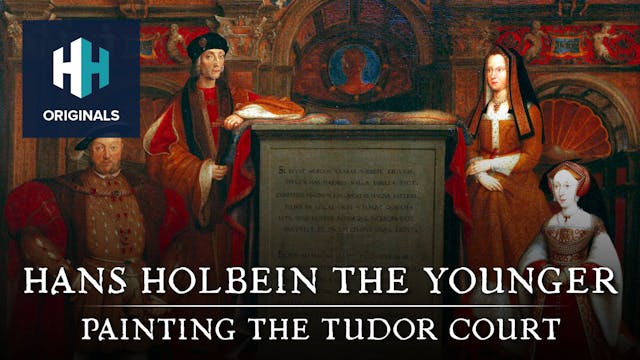
Hans Holbein the Younger: Painting th...
In this fascinating documentary historian Dr Nicola Tallis and author Franny Moyle dissect and unravel the meaning behind the famous paintings of the Tudor Court depicted by the renowned artist, Hans Holbein the Younger.
Born in Ausburg in 1497, Holbein worked as a painter and printmaker in Bas...
-
Mary Tudor - Real Fake History
On November 17th 1558, Mary Tudor, Queen Mary I of England, died - the end of a short and still controversial reign. But what if history had been different, what if she didn’t die in 1558, but lived longer to reimpose Roman Catholicism on England and forge a long lasting Anglo-Spanish alliance?
...