
In 1845, a British voyage of Arctic exploration led by Captain Sir John Franklin departed England aboard two ships, HMS Erebus and HMS Terror. The expedition was assigned to traverse the last unnavigated sections of the Northwest Passage in the Canadian Arctic and to record magnetic data to help determine whether a better understanding could aid navigation.
The expedition met with disaster after both ships and their crews, a total of 129 officers and men, became icebound in Victoria Strait near King William Island in what is today the Canadian territory of Nunavut. After being icebound for more than a year Erebus and Terror were abandoned in April 1848, by which point Franklin and nearly two dozen others had died. The survivors, now led by Franklin's second-in-command, Francis Crozier, and Erebus's captain, James Fitzjames, set out for the Canadian mainland and disappeared.
In his latest book, ‘Erebus: The Story of a Ship’, globetrotter, author and comedian Sir Michael Palin explores the journey of the ill-fated former Hecla-class bomb vessel,and sat down with Dan Snow to discuss it’s history in more depth.
Up Next in More Interviews
-
The Room Where It Happened: Versaille...
Join Dan Snow and a hand picked team of experts for a thought-provoking panel discussion that delves into one of the most consequential diplomatic agreements of the 20th century: the Treaty of Versailles.
Representing Woodrow Wilson and America is Historian Alexandra Churchill, taking the perspe...
-
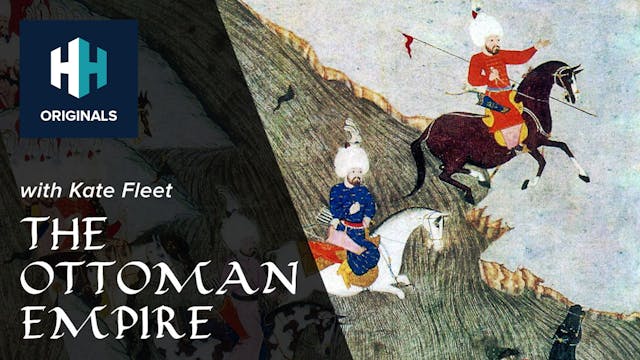
Ottoman Empire with Kate Fleet
The region stretching from eastern Europe and sweeping right across into Arabia and the north coast of Africa, was home to one of the most extraordinary empires in history: the Ottoman Empire. Along its routes flowed ideas, goods, disease and death. In existence for 600 years, it also saw the swe...
-
The Real Life of Gladiators in Ancien...
Tristan Hughes sits down with Alexander Mariotti, a leading speaker on gladiatorial life, combat, and weaponry as well as a historical consultant on Ridley Scott's 'Gladiator' movie (2000).
Together they discuss what life was really like for these men entering the arenas of the Roman Empire, wh...


13 Comments