
Prof Michael Livingstone investigates Richard the Lionheart's medieval super fortress.
At the end of the 12th century, tensions between England and France were growing. The two kings, the ambitious Philippe II of France and the warrior Richard the Lionheart of England, had once been great allies but now were sworn enemies, each determined to destroy the other.
On the frontline of the conflict was a brand new English castle built on French soil, mighty Chateau Gaillard. Today, it stands in ruins, but it remains an impressive bastion dominating the landscape. This wasn’t just an English castle. It was a statement of military intent and an engineering marvel - a memorial in stone to the Lionheart.
How was it built? History Hit goes to the extraordinary castle building project at Guedelon to find out how to make a fortress.
Michael digs into the dramatic history of Chateau Gaillard, exploring what happened during the bloody siege that took place here. Why was Chateau Gaillard so important that Richard himself referred to it as his fair castle upon the rock?
Up Next in Medieval
-
Temple Church and William the Marshal
Just east of where the Strand turns into Fleet Street in London, there is a small stone archway. Walking through it, one stumbles across a hidden world – one that is leafy, serene and historic. Most of the people who wind their way here don’t realise that the whole area was actually the stronghol...
-
Treasures of the Royal Mint: The Edwa...
With a history stretching over 1,100 years, The Royal Mint has forged a fascinating story through the world of historic coins. As the second oldest mint in the world, and the oldest company in the UK, their history is entwined with the 61 monarchs who have ruled England and Britain.
The Royal Min... -
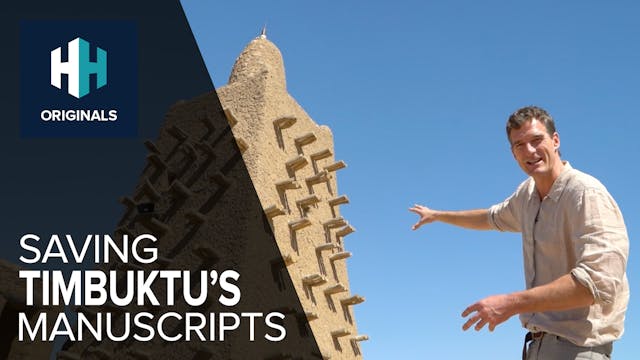
Saving Timbuktu's Manuscripts
For centuries the city of Timbuktu was famed as a golden metropolis situated on the southern fringes of the Sahara; tales of its immense wealth and its reputation as a key centre of learning obsessed travellers and adventurers for many hundreds of years. Timbuktu certainly has one of the most ill...


9 Comments