Michael Scott on Classical Connections
Interviews
•
38m
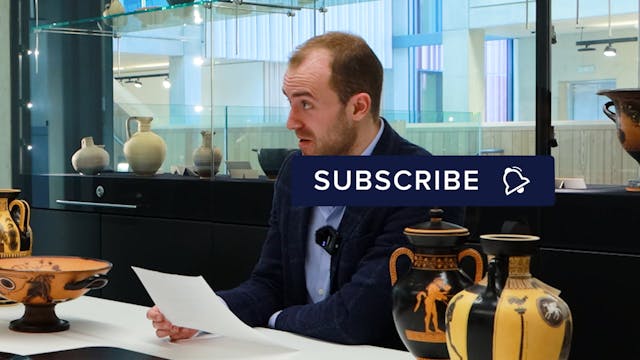
When one thinks of the Ancient World you would be forgiven for instantly thinking of either the cultural glories of ancient Greece or the military might of the Roman Empire. Yet the Mediterranean and the Near East was just one part of a much larger, interconnected ancient world. In India and China too, great kingdoms rose and fell, helping to shape the world we know today. Many consider these ancient worlds to be separate and apart from their western contemporaries. This however, could not be further from the truth. Mediterranean knowledge of distant lands in the East had been somewhat-understood since the days when the Persian Empire was at its zenith – when Greek sailors helped construct Darius I’s great fleet down the Indus river. Yet it was Alexander the Great’s conquests between 334 and 325 BC that helped extend these horizons. Not only were diplomatic relations opened up between the Hellenistic world and the strongest kingdom in India but an exotic Greek kingdom arose in modern-day Afghanistan: the Greco-Bactrian kingdom. Famed for its wealth in deepest Asia, this kingdom had strong trading connections with China and the Far East, along routes later known as the ‘Silk Roads.’ By the 1st century AD, the age of the Greco-Bactrian kingdom had long-passed. Yet Mediterranean connections with India and the Far-East continued and became a significant part of Imperial Roman trade. Greco-Roman merchants travelled far and wide from the Mediterranean basin in their search for precious, exotic cargo with Indian, Chinese and other far-eastern traders doing likewise. Of these cargos one of the most precious items desired in the Mediterranean World was Silk. The Romans knew that silk was made from the far-east and their merchants – so much so that they started to refer to the Chinese as the ‘Seres’ or silk people. Both the west and the far east were well aware of the others’ existence and they made many attempts to establish direct contact. In this documentary Michael Scott discusses the immense age of the Silk Road and its importance to Imperial Rome. Michael Scott is a Professor in Classics and Ancient History at the University of Warwick and regularly presents historical documentaries on various topics – from the tumultuous history of Sicily to the ever-present mystery of what happened to the body and tomb of Alexander the Great? Michael’s recent book ‘Ancient Worlds’ – that focuses on the interconnected nature of ancient China, India and Europe – is now available on Amazon and from all good book stores.
Up Next in Interviews
-
Debunking the Myths of Ancient Sparta
"Did 300 Spartans Really Fight at the Battle of Thermopylae?"
Ancient historian Professor Michael Scott sits down with History Hit's Tristan Hughes to dispel some of the myths we continue to believe about Ancient Sparta.
-
Quickfire Questions with Author Berna...
English author Bernard Cornwell, best known for his novels about Napoleonic Wars rifleman Richard Sharpe, sits down with Dan Snow to answer some quickfire questions for the fans. Ever wondered if an early 19th Century infantryman could really fire three rounds a minute? Or whether Bernard plans o...
-
The Knights Templar: With Dan Jones
They might be more famous today for their cameos in The Da Vinci Code and Assassin’s Creed, but in real life they were an army of valiant, daring Crusaders famous for their self-discipline, who fought in the Middle Ages' most bloody battles. They were allowed no sex, no personal possessions, and ...