Rodin and the Art of Ancient Greece
Historical Tours
•
20m
Born in Paris in 1840, François-Auguste-René Rodin is quite possibly the most famous sculptor in recent history. Considered by many to be the first ‘modern’ sculptor, his works such as ‘The Kiss’ and ‘The Thinker’ have become iconic throughout the world. He possessed a unique ability to model a complex, turbulent surface in clay. Rodin clashed with the predominant figurative sculpture traditions, in which works were decorative, formulaic, or highly thematic. He departed from the traditional themes of mythology and allegory, and instead modelled the human body with realism, and celebrated individual character and physicality. But Rodin did not set out to rebel against the past. He was schooled traditionally, took a craftsman-like approach to his work, and desired academic recognition – despite the fact that he was never accepted into Paris’s foremost school of art, despite applying 3 times. In fact, Rodin is tied very closely to the classical past, and particularly Ancient Greece. Indeed, when he gifted part of his collection of works to the V&A in 1914, The Times wrote that ‘There are very few artists in the whole history of art who could make a gift worthy of such an occasion, but M. Rodin is one of them - one with Michelangelo and Donatello, and with the earlier masters of Greece.' Rodin took huge inspiration from the classical art he saw at the British Museum in 1881. Now Janina Ramirez returns to the very same institution to guide us round the exhibition of his iconic works and ancient influences, exhibited here side-by-side for the first time.
Up Next in Historical Tours
-
Auschwitz: The Evolution of Terror
Join Holocaust expert and historian Dr James Bulgin as he is given unprecedented access to Auschwitz-Birkenau to uncover how this site was transformed, step by step, decision by decision, from a concentration camp for political prisoners into the epicentre of one of the worst crimes in human hist...
-
Karnak: Decoding Egypt's Greatest Temple
History Hit’s ancient history expert, Tristan Hughes, digs deep into one of Ancient Egypt's greatest treasures, a site that ranks among the world’s most impressive religious sanctuaries in both its size, splendour and importance.
But there is another, fascinating side to exploring Karnak beyond ...
-
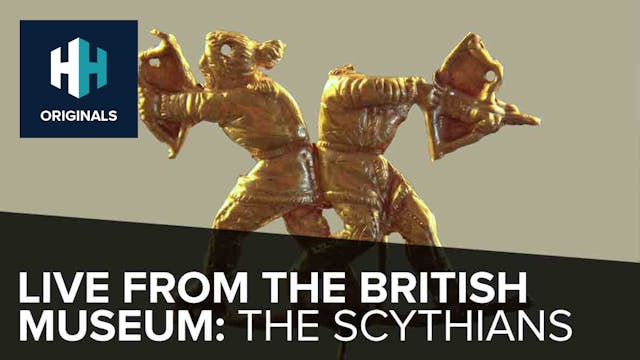
Live from the British Museum: The Scy...
2,500 years ago groups of formidable warriors roamed the vast open plains of Siberia. Ferocious nomads, they roamed from Southern Russia down into Iran – a whole region that makes up the middle portion of the Silk Roads. Feared, loathed, admired – but over time forgotten… until now. A new major e...