The Children of Calais: Clare Mulley on Refugees
Everyday Life
•
4m 38s
A new statue has just been unveiled in Saffron Walden, an unassuming town in Essex, England. Five children are held, with limbs outstretched or shoulders hunched, in life-size bronze. One carries a tattered lifejacket, which hangs uselessly below him. The statue, titled Unaccompanied Children of Calais, demands that we consider the sacrifice refugee children have to make for our supposed ‘greater good’, the voices that use them as political leverage, and the potential for humanity to simply turn away. In consciously evoking Rodin’s The Burghers of Calais, it also draws parallels with other points in history when the vulnerable were, or were not, granted safety in the face of terrible circumstances. One such moment was the organisation of the Kindertransport, a rescue effort that took place during the 9 months prior to the outbreak of World War Two. Britain took in nearly 10,000 predominantly Jewish children from Germany, Austria, Poland, Czechoslovakia, and the Free City of Danzig, who fled persecution from the Nazi party. Children were unaccompanied, but visa and passport restrictions were lifted and they were able to enter Britain with a ‘white card’. The shelter was supposedly temporary – but most of the children would never see their families again. In this fascinating documentary Clare Mulley reports on the unveiling of the new sculpture and reflects on the Kindertransport as an extraordinary moment in British history, questioning how we can learn from our past when faced with the refugee crisis of today.
Up Next in Everyday Life
-
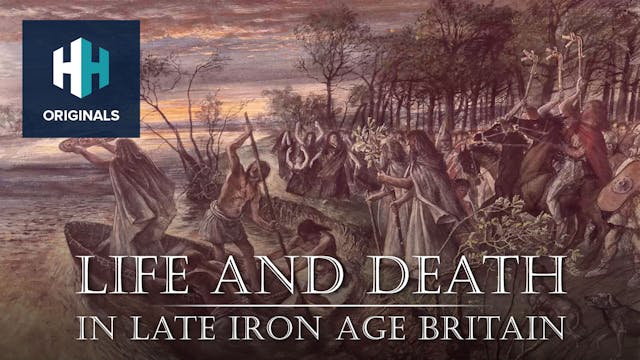
Life and Death in Late Iron Age Britain
Roman connections with Britain stretch back to (at least) the mid 1st century BC, but what has archaeology revealed about the Late Iron Age British societies they interacted with? Do we have any concrete evidence for the druids? Was human sacrifice a thing? Sit back and enjoy as experts provide a...
-
Hieroglyphs: Unlocking Ancient Egypt
2022 isn't just 100 years since the discovery of Tutankhamun's tomb. It's also exactly 200 years since one of history's greatest linguistic puzzles was cracked: when Jean-Francois Champollion made the ultimate breakthrough and deciphered the ancient Egyptian hieroglyphic code. To mark this very s...
-
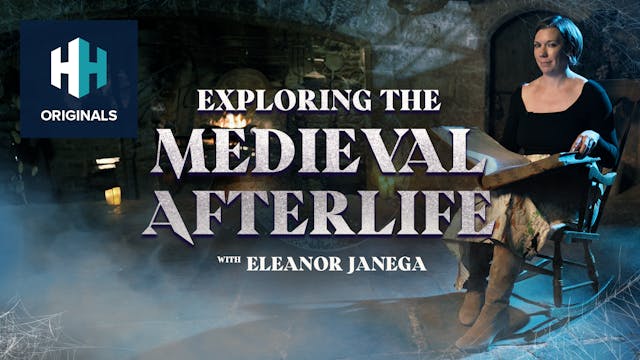
Exploring the Medieval Afterlife with...
Ghosts, ghouls and things that go bump in the night! Dr Eleanor Janega delves into the medieval phantasmic to find out what their restless dead can tell us about the worries of the living. Because if we want to understand what makes another society tick, it helps to take a look at what makes them...