
Matt Lewis and Eleanor Janega make a hands-on journey into the depths of medieval winter - was it a time of feast or famine; a season of cold, dark and hunger or the time of year when medieval folk could kick back and enjoy seasonal celebrations? From food to cosy fashions and fireside tales, History Hit explores how our medieval forebears survived the cold winter months through resourcefulness, community, fun and feasting!
We have a wealth of information about mediaeval life, from beautiful manuscripts to archaeological evidence. In the freezing winters of the 14th century’s Little Ice Age, life could be extremely hard, great rivers froze and food could be scarce. Working with living history experts Caroline Nicolay and Tom Timbrell, we explore the details of medieval life: cooking (making delicious original ginger bread), working the forge to make tools, carrying out farm tasks and lighting the home mediaeval-style with animal fat candles and rush-lights. Eleanor even finds out how to ‘burn the candle at both ends’. We also enjoy one of the great winter stories, ‘Sir Gawain and the Green Knight’, an Arthurian adventure set in the depths of winter, telling of the battles a pure knight fights against both bodily temptation and the icy weather!
Matt and Eleanor also travel to Gray’s Cider Farm in Devon to take part in a fine medieval tradition to dive into a timeless tradition, wassailing! Praising the apple trees and hoping for a good crop and some fine cider next year.
We finish with an incredibly important part of the medieval winter, a feast where the whole community comes together. Matt and Eleanor get a taste of what it was like to be a part of a real medieval banquet, from poached pears, to giant pies and 14th century wine and ale.
Want to find out EVEN more about Wassailing? Listen to Matt and Eleanor's podcast Gone Medieval for a Wassailing special on the 16th January.
https://podfollow.com/gone-medieval/view
Listen to Gone Medieval wherever your podcasts, twice a week every week!
________________________
If you want to make your own Gingerbread just like Eleanor, here’s the recipe - happy cooking!
GINGERBREAD
Ingredients:
300ml Honey
450 gr Breadcrumbs.
5 tsp ground ginger
1 tsp ground pepper
1 tsp ground cloves
1 tsp ‘grains of paradise’ (if you can find them - alternatively you can use orange zest + a pinch of freshly ground black pepper to the mix)
Method:
Take honey & warm it by the fire.
Take bread & pull it apart, grate it into crumbs
Mix it with the hot honey and slowly stir in the spices
Put the mixture in a tin, cover and leave overnight.
Cut into pieces when cold and serve decorated with whole cloves.
________________________________
Find out more about the places we visited:
Cosmeston Medieval Village - https://www.valeofglamorgan.gov.uk/en/enjoying/Coast-and-Countryside/cosmeston-lakes-country-park/cosmeston-medieval-village/Cosmeston-Medieval-Village.aspx
Caroline Nicolay - Experiential Archaeology & Living History - https://www.pariogallico.com/
Tom Timbrell - Experiential Archaeology & Living History - https://www.heritageblades.co.uk/
Grays Cider Farm - https://graysdevoncider.co.uk/
Jim Causley - https://www.jimcausley.co.uk/
Mariners Away - https://marinersaway.co.uk/
Up Next in Everyday Life
-
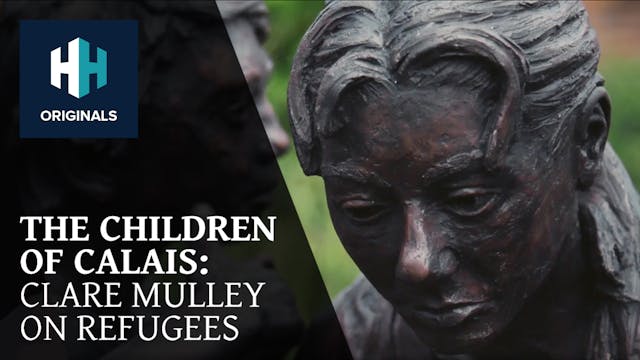
The Children of Calais: Clare Mulley ...
A new statue has just been unveiled in Saffron Walden, an unassuming town in Essex, England. Five children are held, with limbs outstretched or shoulders hunched, in life-size bronze. One carries a tattered lifejacket, which hangs uselessly below him. The statue, titled Unaccompanied Children of ...
-
Ham House: Women of the Civil War
About 10 miles from the centre of London is one of the most magnificent houses of Stuart England, Ham House. This lavish mansion is a treasure trove of 17th century art and architecture, a dazzling red-brick jewel on the muddy banks of the River Thames.
But Ham House also has a remarkable hist...
-
Digging up the 'Dark Ages'
Join Dan Snow as he explores this stunning set of discoveries in our brand new documentary ‘Digging Up the Dark Ages’ on History Hit TV.
While working on the HS2 high speed railway project in the UK, archaeologists made discoveries of national significance, uncovering a large Anglo-Saxon burial...


56 Comments