Ottoman Empire with Kate Fleet
Early Modern
•
29m
The region stretching from eastern Europe and sweeping right across into Arabia and the north coast of Africa, was home to one of the most extraordinary empires in history: the Ottoman Empire. Along its routes flowed ideas, goods, disease and death. In existence for 600 years, it also saw the sweeping expansion of one of the most important religions in the world: Islam. Now it is taking centre stage in international politics, commerce and culture. It is shaping the modern world. Yet Constantinople, today’s Istanbul, has always been the gate between East and West, North and South. Standing as both an idea and a place, it has been the capital city of the Roman, Byzantian and Ottoman Empires. It has always looked West, as well as East. But in today’s world, after rebuttals from the EU, Istanbul is turning its face resolutely eastwards once again – which should be cause for deep concern for those living in Europe. In this fascinating discussion with Dan Snow, Cambridge University’s Dr Kate Fleet takes us on a tour of the hugely successful and long lasting empire, and questions how we should view its legacy in the modern era.
Up Next in Early Modern
-
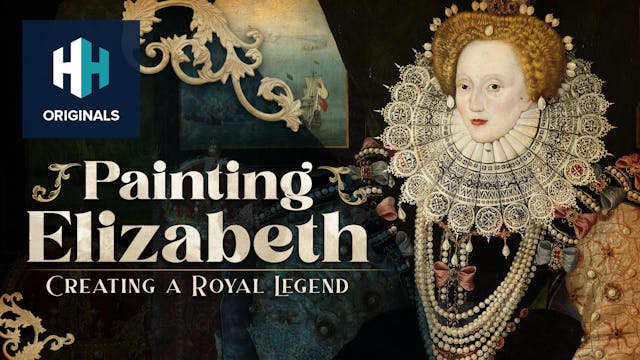
Painting Elizabeth: Creating a Royal ...
Elizabeth I is one of the most iconic figures from British history - her image can be recognised in an instant. But this was no mistake, for Elizabeth’s portraits were an audacious act of spin to cement her image of female majesty. In this documentary Dr Nicola Tallis and Prof Anna Whitelock take...
-
Mary, Queen of Scots - Not Just the T...
Mary’s biography is enormously dramatic, packed with romance, betrayal, imprisonment and violence. Unsurprisingly, it has proved irresistible to film-makers, recreating a time when two queens vied for power - Mary in Scotland and Elizabeth I in England. Their relationship was blighted with mistr...
-
Secrets of Shakespeare's Stratford - ...
In this episode, Alice and Dan discover how the Shakespeare family were rocked by religious turmoil of the 16th century. They visit one of the most notorious Catholic houses in the county, William Shakespeare's schoolroom and the ruins of Evesham Abbey.