

The Dead Sea Scrolls regularly rank amongst the most significant archaeological discoveries of recent decades. Over 900 papyrus documents, discovered in caves near the site of Qumran, that date to the century before Jesus and include the oldest surviving manuscripts from the Hebrew Bible.
But amongst these scrolls was one that was very different. In 1952, placed in a small niche in one of the caves, archaeologists discovered a scroll made of copper, completely oxidised and filled with dirt.
It was a treasure list, recording vast quantities of gold and silver equal to millions today. Buried in locations around Jericho and the Dead Sea almost 2,000 years ago. To this day, no-one has claimed to have found any of these treasures. It remains a fascinating and mysterious mystery.
In this documentary, Tristan investigates its story. His journey begins at the Jordan Museum in Amman, where the Copper Scroll is currently on display. Cut up into 23 strips and beautifully laid out as the centrepiece artefact of its own special room.
From Jordan, he then travels to Manchester Museum in northern England, where part of the scroll was taken in the 1950s to be expertly opened by the philologist John Allegro and his team.
With the help of Dr Joan Taylor, Tristan finds out what Allegro and his associates discovered. They explore what the Hebrew text actually says, analyse a few key entries and explore what might be the context for the burial of so much treasure. Could it be linked to an ancient Jewish revolt against Rome and the horrific retribution that followed?
Up Next in Digging up History
-
Ghost Ships: Forgotten Wrecks of the ...
All around the UK, in rivers and streams, and in the mud on the side of riverbeds are the remains of our maritime past, which helps us understand who were are today.
In 2013, a survey around the UK identified 199 different assemblages of hulks, remains of craft. These included paddle ships, ferr...
-
Finding the Lost Battlefield of Bruna...
The Battle of Brunanburh was one of the bloodiest and biggest battles of early medieval history. Fought 1100 years ago, Athelstan - the king of the English - opposed a coalition of Irish, Scots, Northumbrians and Vikings and won a decisive victory. The enemy shield wall was penetrated. Their troo...
-
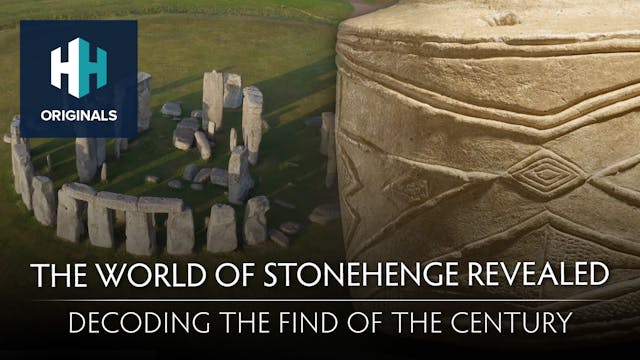
The World of Stonehenge Revealed: Dec...
Described as the "most important piece of prehistoric art to be found in Britain in the last 100 years", an elaborately decorated 5000 year-old chalk cylinder, discovered buried with 3 child skeletons in Yorkshire and as old as the first phase of Stonehenge, is going on display at the British Mus...


11 Comments