
History Hit digs deep into a fascinating new discovery that has grabbed the attention of historians across the world.
Prof. Suzannah Lipscomb explores what is being called the most exciting Tudor find ‘in a generation’ as curators at Hever Castle identify a bejewelled, gilded prayer book, tucked away in a Cambridge University library, as the very one portrayed in Holbein’s famous painting of Henry VIII’s ‘fixer in chief’, Thomas Cromwell.
It reveals that three key players in Henry VIII’s court, Anne Boleyn, Catherine of Aragon, AND Thomas Cromwell, all owned a copy of the same printed prayer book.
In this special film, Suzannah tracks the detailed historic detective work that has been carried out by Hever’s curators and Trinity College’s Wren Library, linking the prayer book through the generations from Thomas Cromwell himself to a gift to the library by Dame Anne Sadleir in 1660.
We are delighted to bring you this remarkable story that combines a modern day investigation with stunningly beautiful objects and the tangled web of shifting beliefs and personal connections at the heart of the Tudor world.
_____
After watching the film, you can find out more by visiting the following websites of Hever Castle and Trinity College:
https://www.hevercastle.co.uk/news/thomas-cromwell-book-on-display/
https://www.trin.cam.ac.uk/news/thomas-cromwells-book-of-hours-in-trinity-college-library/
Up Next in Digging up History
-
Saving Timbuktu's Manuscripts
For centuries the city of Timbuktu was famed as a golden metropolis situated on the southern fringes of the Sahara; tales of its immense wealth and its reputation as a key centre of learning obsessed travellers and adventurers for many hundreds of years. Timbuktu certainly has one of the most ill...
-
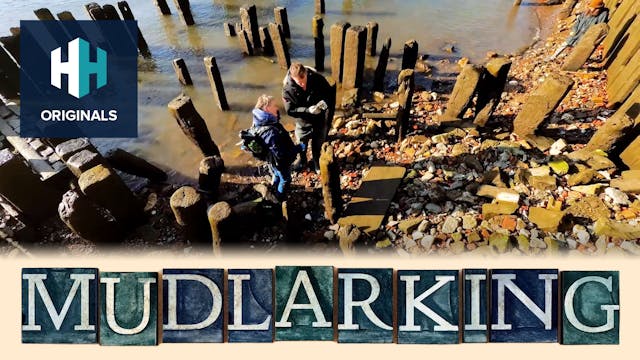
Mudlarking
Dan joins author and mudlark expert Lara Maiklem for a spot of mudlarking.
-
Vikings, Shipwrecks and Dinosaurs: Se...
Striking a line west along this dramatic stretch of ever-changing cliffs, Sam and his four legged companion Geronimo, begin their coastal journey at the red cliffs of Exmouth, a location that my have served as a reference point for the Vikings as they made the journey across from mainland Europe ...


60 Comments