

What was life truly like living in a workhouse during the 1800s?
Luke Tomes and Katie Kennedy ( @thehistorygossip ) embark on a journey, exploring what life entailed in a Victorian workhouse as a tramp or "vagrant", and pauper.
Whilst Luke, desperate to stay off the streets, is stripped of his clothing and sent to break rocks in the work-yard, before being provided with a measly looking meal of 'gruel', Katie discovers her life isn't much better as a pauper, with a brutal schedule that involves work, exercise, prayer time and school. At least she isn't caught loitering in forbidden areas, an offence which would incur a brutal punishment, as Luke was to find out...
Just how brutal was the institution? Did people die within it? Was there any hope of escape?
Find out in this spin off Victorian special of 'Could You Survive'!
Many thanks to Ripon Workhouse Museum for providing the filming location. Find out more about the site here: https://riponmuseums.co.uk/workhouse-museum-garden/
Voiceovers provided by Alister Tomes, Annie Woodman and Reece Foster.
Up Next in Surviving the Victorians
-
Could you Survive as a Victorian Work...
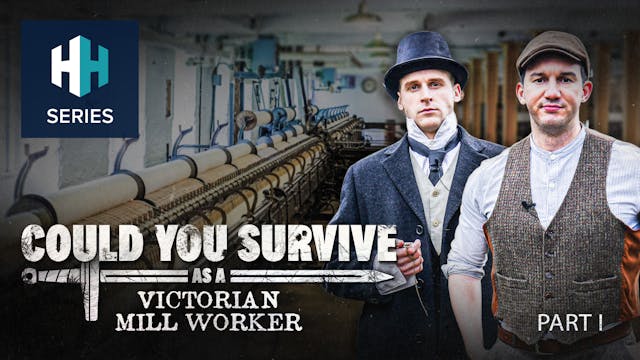
As new technologies emerged throughout the 19th century, and the use of water and steam power became commonplace, millions of rural workers, including thousands of children, descended on the growing industrial towns to work in mills and factories. Northern cities such as Manchester, Leeds and She...
-
Could You Survive On the SS Great Bri...
What was working on SS Great Britain really like? Isambard Kingdom Brunel's SS Great Britain is undoubtedly one of the most important historic ships in the world. When she was launched from Bristol by Prince Albert in 1843, she was called 'the greatest experiment since the creation'. No one else ...


1 Comment