
Situated roughly one mile south of Hadrian’s Wall is one of the great jewels of Roman and early medieval archaeology: Vindolanda. Over the past 50 years, annual excavations at this site have revealed incredible amounts of new information. Information that has not only shone more light on the site’s history, but also on the minutiae of everyday life for those people who lived on this north western frontier of the Roman Empire almost 2,000 years ago.
A plethora of stunning artefacts have been unearthed over the last half decade from Vindolanda: from the only Roman boxing gloves found from anywhere in the Roman Empire to early medieval Christian graffiti. What’s most exciting of all, however, is that there are still so many more exciting finds to be uncovered in the years ahead.
As 2021 nears it end, the Vindolanda team have just wrapped up their most recent excavation of the site. History Hit’s Tristan Hughes headed up to Vindolanda to see what discoveries they’ve made this year and the exciting prospects for the 2022 season. Featuring Dr Andrew Birley, Head of Excavations at Vindolanda, and Marta Alberta, Site Archaeologist at Vindolanda.
Up Next in Ancient Rome
-
Enemies of Rome: In Search of the Picts
For centuries they were depicted as enemies and barbarians, only portrayed through the eyes of the Roman Empire. Now, through new archaeological discoveries and research, the story of the Picts is being rewritten.
Join Tristan Hughes as he travels across Scotland, meeting experts in stone-carvin...
-
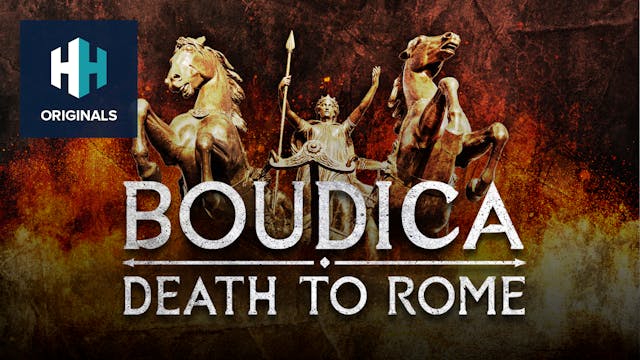
Boudica: Death to Rome
In 60/61 AD turmoil seized southern Britain. A massive anti-Roman revolt reared its ugly head in East Anglia, as tens of thousands of Britons attempted to evict the recently-arrived Romans from the island by the spear. At its head was one of the most famous figures in the whole of British history...
-
Pompeii: The Discovery
Dan Snow tells the incredible story of how Pompeii was discovered.


21 Comments