
In 55 BC, Rome had its sights set on Britain. Across two attempts, a huge invasion force led by one of the greatest miltary leaders in history, Julius Caesar, landed in Kent. Eventually he would break through and conquer the southern heart of the island.
It had not been an easy task. In his first attempt to conquer Britain, Caesar took with him only two legions, and achieved little beyond a landing on the coast of Kent. His force was heavily contested as soon as it landed on the beaches near Dover and had only managed to break inland through a combination of grit, determination and advanced military weapons and tactics.
Caesar's second invasion consisted of 628 ships, five legions and 2,000 cavalry. The force was so imposing that the Britons did not dare contest Caesar's landing in Kent, waiting instead until he began to move inland. Caesar's force penetrated into Middlesex and crossing the Thames, forcing the British warlord Cassivellaunus to surrender as a tributary to Rome.
Yet the great Caesar did not stay in Britain long. Instead, he returned to Rome in triumph, utilizing the success of his distant conquest to bolster his eventual dictatorship.
In the first episode of this series, bushcraft and survival expert Ray Mears explores the surviving evidence we have of Caesar's invasions of Britain over 2000 years ago. Featuring historians Dr Simon Elliot, Dr Steve Willis and Roman reenactor David Richardson.
Up Next in Ancient
-
The Origins of Warfare
In 1974, 29 years after the end of the Second World War, Japanese soldier Hiroo Onoda finally surrendered after almost three decades of fighting a guerilla campaign on a remote island in the Philippines.
-
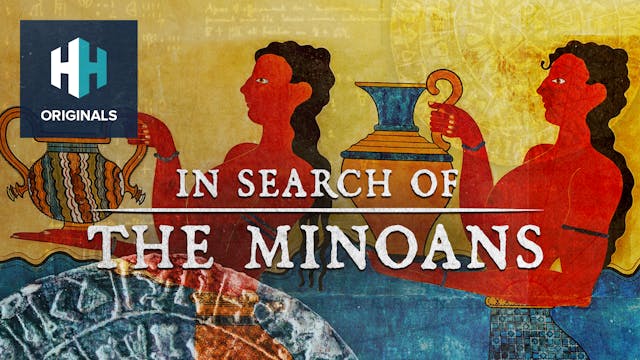
In Search of the Minoans
Rediscovered at the beginning of the 20th century through the work of British archaeologist Sir Arthur Evans, the Minoan Civilization, whose earliest beginnings were from c. 3500 BC on the island of Crete, became one of the most developed, complex urban civilizations in antiquity. Yet we still kn...
-
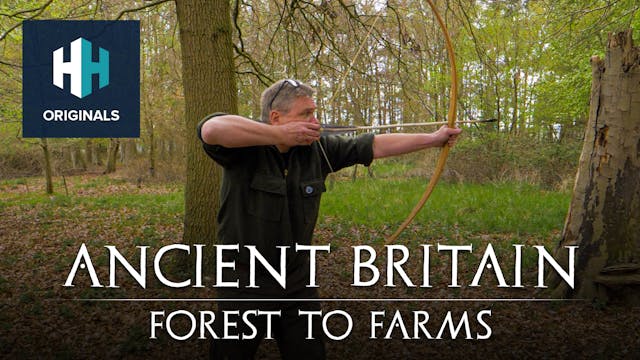
Ancient Britain with Ray Mears: Fores...
12,000 years ago, Britain entered a new chapter in its long history. By this point, hunting tools had evolved, from hefty spears to the slick and stealthy bow and arrow. This revolution in technology would change the way humans hunted forever.
In a period in which Britain was also thawing and e...

14 Comments